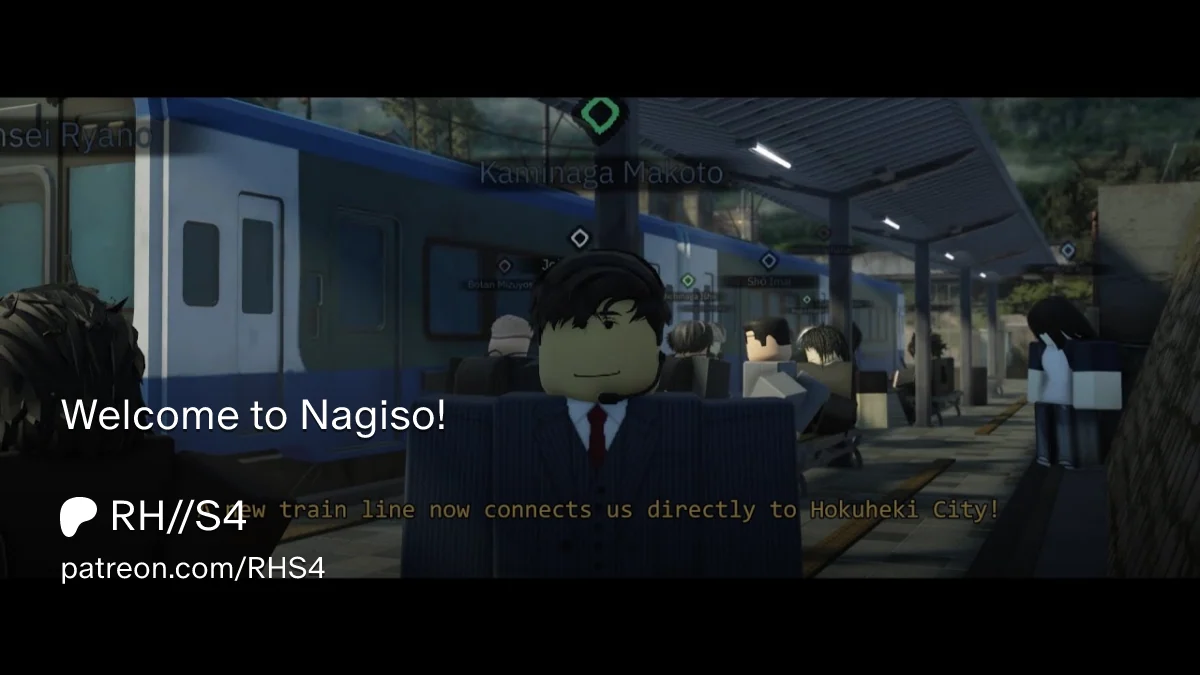
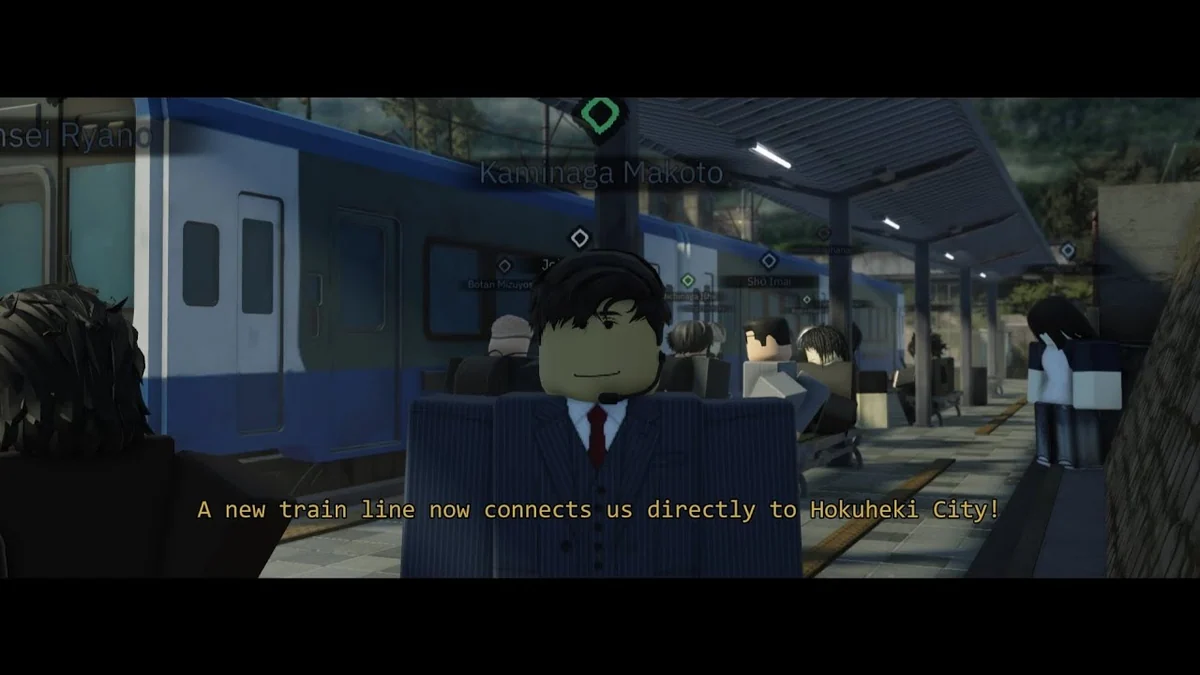
The published setting
The official creator description supplies the starting frame: Rintama High is a roleplay-based delinquent game set around an early-2000s rundown school in Japan. That gives the site a clear editorial boundary. The school is a central part of the stated premise, but the public description does not give a canonical floor plan, a list of school staff, or a verified gang directory. A useful guide should preserve the frame without filling the silence with fan fiction.
The public media makes the frame feel concrete. The launch teasers show a social, urban school setting; the public Patreon archive later uses Hokuheki City and Nagiso in its titles. Treat that as a set of creator-published reference points. When you need a live route, access condition, or control binding, the relevant Roblox community and Training Grounds pages still outrank an old video or a guide paragraph.
Hokuheki City and the next town
Hokuheki City appears in the public creator material as the main-city reference point for the Nagiso announcement. The creator’s later post title, The beauty of Hokuheki City & Nagiso, confirms that both names are part of the project’s public world language. This is the right level at which to use the city name: as a documented place reference in official material, not as evidence for a list of unannounced neighbourhoods or mechanics.
Nagiso is described more directly. The official announcement calls it a new town located not too far from the main city and says the train can take players there. The post also contrasts it with the main city by inviting players to enjoy the peaceful town. Those are the details a new visitor can safely carry into a roleplay: there is an official city-to-town connection, it is part of the first documented map expansion, and the source presents a different pace of place.
Use the train detail correctly
The train is one of the strongest public world details because it is written in the official announcement, not guessed from an image. The post says that players can take a train to travel to Nagiso. In a guide, that supports a simple and actionable sentence: check the live game and current community information for the train route when you are ready to move between the main city and the expansion town.
It does not support a fabricated timetable, station list, ticket cost, or claim that every current session uses the same travel flow. Those details can change in a live Roblox experience and are not published by the announcement. Separating the stable fact from the live implementation is more useful than making a detailed map guide that becomes wrong the next time the developer changes a route.
Orientation without invented lore
Use the setting as an invitation to make a readable first character, not as a licence to announce unsupported facts. A modest arrival reason, a short name, and attention to the scene in front of you make more room for other players than an elaborate backstory tied to an unofficial map label. The school premise, the city reference, and the train-linked expansion are enough public material to give a newcomer a sense of place.
When another player uses a location or group name not documented here, let the current community context lead. Ask, listen, and check the creator’s Roblox community when a rule or access step is involved. This makes the guide compatible with a living roleplay project: it provides the public anchors a player can verify, while the people in the current session determine the scene rather than a static wiki pretending to own it.
Where to watch and where to play
The expansion footage is useful visual context, but it should not be the only stop. Watch the official Expansion Teaser from the Trailer Archive to see the film that the Welcome to Nagiso post links. Then use the official Roblox community for current access information and the main Rintama High experience for the live platform route. These sources have different jobs, and treating them as interchangeable is how players end up following stale instructions.
The source desk on the home page keeps the direct links together. The world guide will grow only when the creator publishes another named place, an explicit world description, or a public map update. Until then, a smaller factual map is better than a larger speculative one: it helps players recognise the setting without turning visual mood into false documentation.
Official referenceOfficial Rintama High Patreon — Welcome to Nagiso ↗